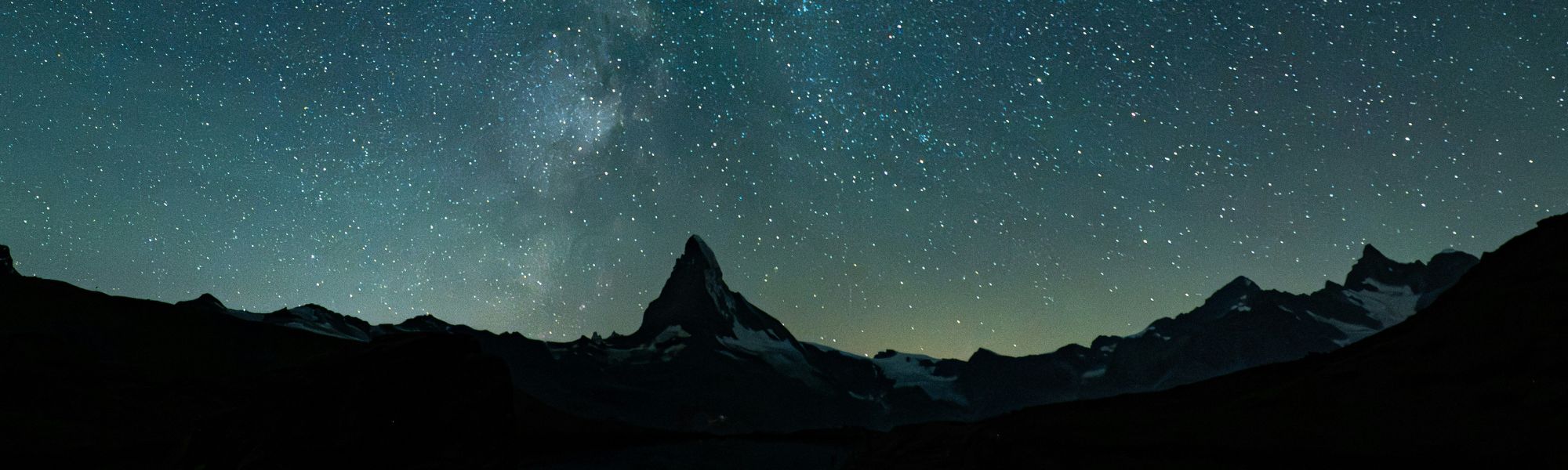
How can we light responsibly so towns and cities remain safe, welcoming and functional, while still preserving the darkness needed to experience the marvel of the Milky Way?
The Growing Impact of Artificial Light at Night
Across much of Europe and North America, truly dark skies have almost disappeared. Light pollution continues to increase globally, driven by urban expansion, inefficient lighting design and a tendency to over-illuminate outdoor spaces. Research suggests that 30% of outdoor lighting is wasted.
The consequences of artificial lighting extend far beyond the ability to see stars in the sky. Growing evidence links artificial light at night (ALAN) to a range of human health concerns. Studies have shown that excessive exposure to light at night, combined with insufficient daylight exposure, may be associated with increased long-term health risks. Other research points to links between night-time light exposure and systemic inflammation, as well as associations with neurological conditions, including depression and cognitive decline.
At the same time, ecological research continues to highlight the impact of artificial lighting on wildlife. Many species rely on natural light cycles to navigate, feed and reproduce. When those cycles are disrupted, the effects can be significant, altering behaviours and in some cases increasing mortality rates.
The nighttime environment is, in this sense, a shared natural resource. Its degradation affects not only what we can see, but how both people and ecosystems function.
Rethinking Our Relationship with the Night
For many years, brighter environments have been equated with better ones. Lighting has been used to signal safety, activity and progress, often without fully considering its wider impact. As a result, many urban environments have been lit incrementally rather than intentionally, leading to excessive brightness, glare and unnecessary energy use.
Responsible lighting requires us to see darkness as a condition to be understood and preserved. Lighting becomes less about maximising output and more about achieving balance.
Darkness plays an essential role in how we experience space. It provides contrast, allowing illuminated areas to feel purposeful and legible, and supports natural biological rhythms, contributing to a more comfortable visual environment. It also reconnects people with the wider natural world, offering moments of stillness and perspective within increasingly busy urban settings.
This does not mean eliminating lighting altogether, but applying light with greater precision to ensure it supports human activity without overwhelming the surrounding environment.
Designing with Intention
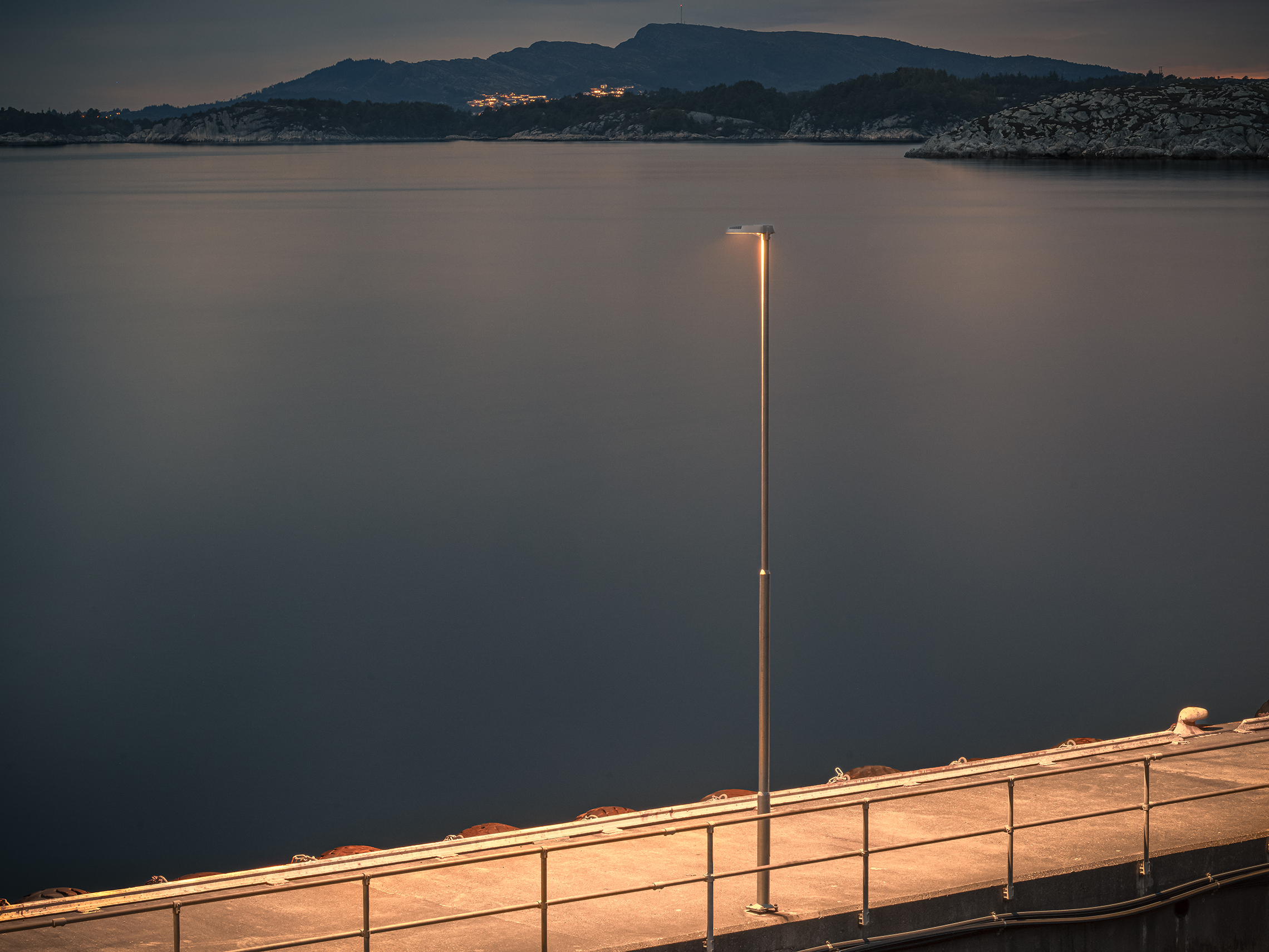
Well-designed outdoor lighting does not rely on uniform brightness. Instead, it uses contrast, hierarchy and careful distribution to create spaces that are easy to navigate and visually comfortable. By directing light only where it is needed and avoiding unnecessary spill, it is possible to reduce skyglow while improving the overall quality of the space.
The principles set out by DarkSky International provide a clear framework for this approach. Lighting should be useful, targeted, low-level, controlled and warm in colour. When applied consistently, these principles support both environmental responsibility and a better user experience.
All light should have a clear purpose. Before installing or replacing permanent lighting, ask: is this lighting needed? Is it the right amount? How will it affect the surroundings, the environment and wildlife?
The right light also includes factors such as colour temperature, wavelength distribution, colour rendering and light levels. This includes selecting the warmest possible colour temperature, limiting lower wavelengths (below 500nm), and ensuring light is no brighter than necessary and directed only where needed.
Balancing Safety, Experience and Ecology
There is often a perception that reducing light levels may compromise safety or usability. In practice, thoughtful lighting design can achieve the opposite.
Whilst lighting is essential – extending the day, aiding navigation and providing a sense of security – lighting carefully calibrated to its context can enhance clarity, support wayfinding and create a greater sense of reassurance.
It supports human experience by improving visual comfort and legibility, respects ecological systems by reducing unnecessary disruption to wildlife, and it also contributes to energy efficiency by avoiding waste and optimising performance over time.
This balanced approach reflects a broader shift towards human-centric and sustainable design, in which lighting is integrated into a broader understanding of how spaces are used and experienced.
The Role of Smart Technology
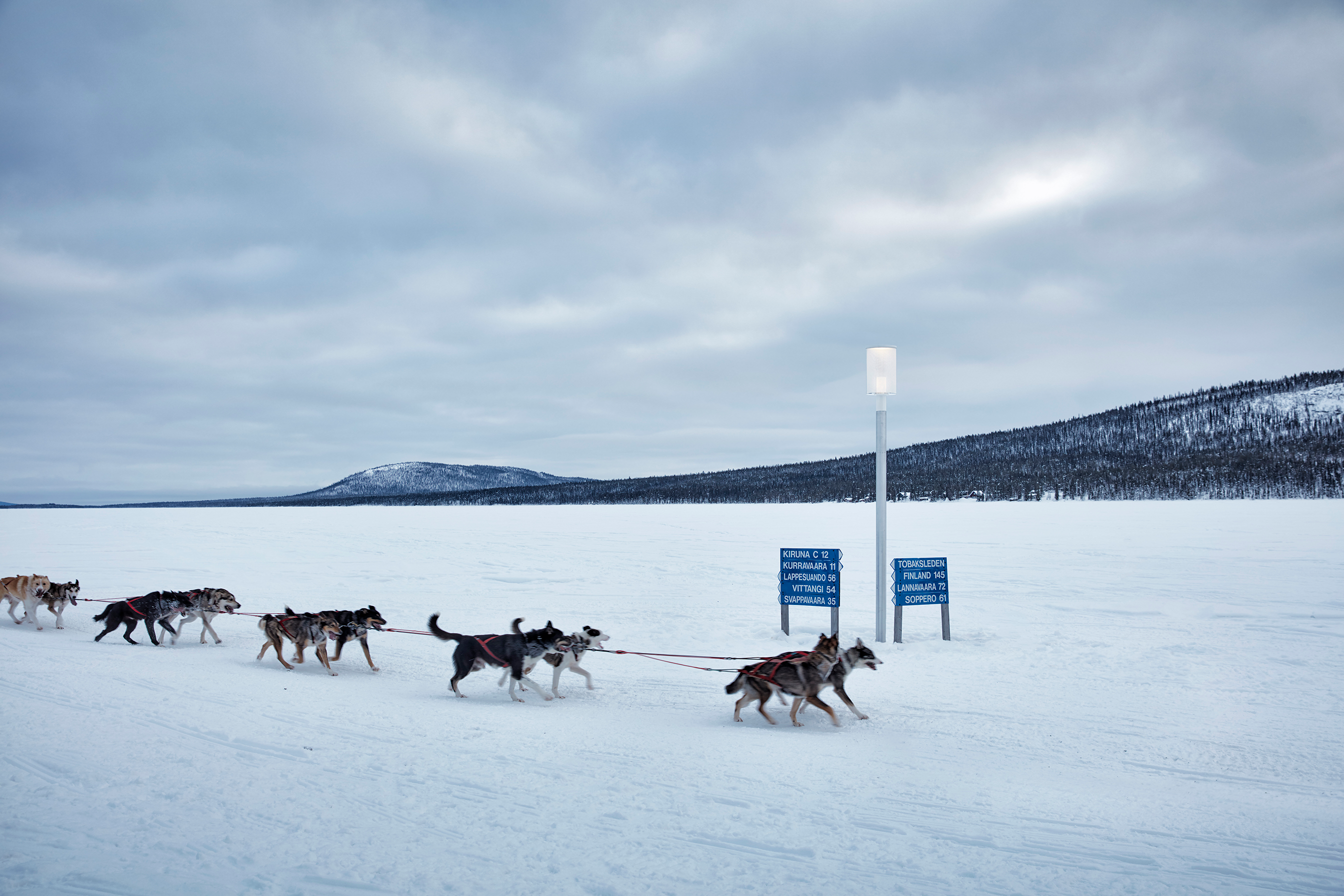
Advances in lighting technology are making it easier to implement responsible design strategies at scale. Connected lighting systems allow for greater flexibility, enabling lighting levels to respond to time of night, activity and specific user needs.
Lighting can therefore be reduced during quieter periods, dynamically adjusted in response to real-time conditions, and more effectively monitored for energy performance. In doing so, cities can move away from static, one-size-fits-all lighting schemes towards more adaptive, efficient solutions.
A Shared Responsibility for the Future
Lighting decisions shape the character of our cities for years to come. They influence how places feel, how they function and how they are experienced after dark. As such, they carry a responsibility that extends beyond immediate project requirements.
The disappearance of the Milky Way from so many urban environments is the result of choices that can be reconsidered . Recognising that darkness has value – and that good design works with it rather than against it – and by embedding responsible lighting principles into planning and design processes, we can protect access to the night sky while still meeting the practical needs of modern cities.
For more information about how Fagerhult can deliver responsible outdoor lighting solutions, please get in touch.
Related News
Has the Lighting Industry Reached a Turning Point on Circularity?
The lighting industry has made significant progress on sustainability, but much of that progress has historically been measured through energy efficiency. For many luminaires, the use phase accounts for as much as 96% of whole-life environmental impact, making efficient LEDs, better optics and intelligent controls essential. But according to Les Thomas, Lighting Technology Manager at Fagerhult and Honorary Treasurer of the Society of Light and Lighting, that focus is now widening. How long can a luminaire remain in use? Can it be upgraded, repaired or reused? What happens when a space changes, or when the product reaches the end of its life? From Energy Efficiency to Circularity Energy efficiency will remain central to sustainable lighting design, but it is no longer the only measure of progress. A highly efficient luminaire can still lose value if it is difficult to maintain, cannot be upgraded or is removed long before the end of its useful life. This is particularly relevant in commercial fit-out. Les points to Cat A installations as one area where circularity could encourage a different approach. In some buildings, lighting is installed across large floorplates before the final tenant requirements are known. A few months later, once an occupier moves in and adapts the space, fittings may be removed even though they still have years of service life left. Even where those products are recycled, material value, labour and embodied carbon have already been lost. For Les, this is where circularity changes the question. Instead of asking only how efficiently a luminaire performs, the industry also needs to ask whether it can be reused, refurbished, upgraded or adapted. How Attitudes Have Changed Since TM66 First introduced in 2021, TM66 — Technical Memorandum 66: Creating a Circular Economy in the Lighting Industry — was developed by CIBSE and the Society of Light and Lighting to provide the industry with a structured way to assess circularity across design, manufacture, maintenance, reuse, and end-of-life. With TM66 now being updated, the conversation around circularity is moving back into focus. Since its introduction, Les has seen awareness grow, even if progress has not always been linear. When TM66 first appeared, there was strong interest. That conversation then became quieter for a period, particularly in the UK. Now, however, it appears to be building again. Fagerhult is seeing more enquiries from project teams asking whether existing fittings can be retained rather than replaced. In some cases, this might involve retaining the luminaire body and supplying a new gear tray to upgrade an older fluorescent fitting to LED. Circularity is no longer only about choosing a new product with stronger environmental credentials; it is also about asking whether an existing product can remain in use. Understanding Circularity One of the most common misunderstandings is that circularity simply means using recycled materials. Recycled material matters, but circularity considers design, material selection, maintenance, replaceability, refurbishment, reuse and end-of-life recovery. At product level, Les sees longevity and serviceability as central. A luminaire that lasts longer places less demand on new resources, but only if key components such as drivers and LED boards can be accessed and replaced. Good circular lighting design also applies at project level. According to Les, the lighting needs to adapt as the space changes. Track-based systems, such as Fagerhult’s Control Track Versa, can allow luminaires to be repositioned as layouts evolve, rather than removed and replaced. “As a space adapts, the lighting can adapt with the space,” he says. Material choice matters too. Manufacturers need to consider where recycled, post-consumer recycled, natural or lower-impact materials can be used, while ensuring the product remains durable, safe and suitable for the application. TM66 in Practice TM66 is helping to make circularity easier to discuss in specifications. It gives project teams a framework for comparing products and asking more informed questions. The scoring system considers different aspects of circularity, including materials, manufacturing and wider ecosystem factors, and claims must be backed by evidence. For Les, that evidence-based approach is one of the framework’s strengths because it helps prevent circularity from becoming another vague sustainability claim. A TM66 score does not eliminate the need for deeper discussion, but it provides the industry with a more consistent starting point. There is still work to do around education, particularly around how TM66 scores should be interpreted and applied in specification. Is Circularity Becoming a Genuine Specification Requirement? Circularity is not yet as embedded as energy performance, but it is moving in that direction. Les says Fagerhult is seeing more requests for TM66 information, Technical specifications are increasingly asking manufacturers to provide clearer environmental documentation, and circularity is appearing more often in project conversations. This suggests that circularity is extending beyond manufacturers, with lighting designers, consultants and clients also incorporating it into their specifications. However, the market is still in transition. Energy performance is widely understood, easy to compare and closely linked to running costs. Circularity is more complex because it asks the industry to consider future use, ownership, maintenance, storage, warranties and end-of-life routes. The Practical Challenges Ahead The biggest barriers to circularity are often practical rather than technical. Cost is one challenge. There can be an assumption that refurbishing a luminaire will be significantly cheaper than buying a new one. In reality, some of the most expensive components, such as LED boards and drivers, may still need to be replaced. That means the upfront cost difference may be smaller than expected, even if the whole-life argument remains strong. Logistics is another issue. If luminaires are removed from a building, they need to be handled carefully, transported, inspected and potentially stored before reuse or refurbishment. On live construction and fit-out projects, that is not always straightforward. Warranty can also be difficult, particularly where products are moved from one building to another without manufacturer inspection or remanufacture. There is also a cultural shift to navigate, as many clients are naturally more familiar with specifying new luminaires than reused or refurbished functional lighting. A Collective Industry-wide Effort is Necessary Manufacturers play a major role because many circularity decisions are made at the design stage. They can design products for longer life, improve access to key components, reduce reliance on virgin materials, provide environmental data and support refurbishment routes. But manufacturers cannot deliver circularity alone. “Even if manufacturers were offering the best solution, if nobody out there wants to use it, it’s not going to get used,” says Les. Circularity has to become a shared responsibility, from clients valuing it and specifiers asking for it to contractors protecting products during removal and manufacturers supporting them beyond the point of sale. From Circular Ambition to Specification Standard Circularity is likely to become increasingly important in lighting specification, but its progress will depend on education, client demand and a clearer whole-life value case. For Les, the next step is greater awareness across the full project chain, especially among end users. A luminaire may cost slightly more upfront, but if it lasts longer, can be upgraded, repaired and supported by the manufacturer, the long-term case becomes much stronger. The turning point will come when circularity sits alongside energy performance, lighting quality, controls, cost and compliance as a standard part of good lighting design. Circularity is moving from conversation to specification, and TM66 is helping give that shift structure.
How We Help Retailers Achieve Their Environmental Ambitions Through Lighting
Retailers worldwide are stepping up to ambitious climate targets, driven by increasing expectations from customers, regulators, and investors. Many are striving to meet standards such as B Corporation certification, making emission reduction both an environmental and commercial priority. While lighting may not always be the first area people consider, it offers one of the fastest and most effective opportunities to reduce environmental impact. At Fagerhult, we know light matters. Lighting accounts for 15% of global electricity consumption. However, by implementing smart lighting solutions, in combination with the latest LED technology, energy use can potentially be reduced by up to 90%. It is common for 90–95% of a luminaire’s total lifecycle greenhouse gas emissions to come from its usage phase. That’s why we focus on innovative technology and knowledge-sharing to help retailers optimise their lighting. Lighting and Emissions: Scope 2 and Scope 3 Lighting plays a key role in both Scope 2 and Scope 3 emissions, which are part of the Greenhouse Gas (GHG) Protocol, the international standard for measuring and managing carbon footprints. The protocol divides emissions into three ‘scopes’ to help businesses understand where their emissions originate and how to address them effectively. Scope 2 covers the indirect emissions from the electricity, steam, heat, or cooling a company purchases and uses, while Scope 3 includes all other indirect emissions from activities such as the production of purchased goods, transportation, and waste. niclas Helping Retailers Reduce Scope 2 Scope 2 emissions are often the easiest to measure — and the fastest to reduce. By upgrading to efficient luminaires, retailers cut electricity bills while shrinking their carbon footprint. Controls and sensors can add further savings, particularly in back-of-house areas. “If you add a sensor, you can cut energy use in that area straight away,” Niclas notes. Sensors in dressing rooms, for example, ensure lights are only on fully when the room is occupied and dimmed when not in use, preventing unnecessary energy use. Supporting Scope 3 and Responsible Sourcing For many retailers, Scope 3 emissions — those associated with the purchase of goods and services — represent the biggest challenge. This is also where transparency matters most, especially for those on the path to B Corp certification. To help, Fagerhult produces Environmental Product Declarations (EPDs) in-house with our own life cycle assessment (LCA) experts. These third-party reviewed documents set out the environmental footprint of each product, including embodied carbon. They provide retailers with credible data for their own reporting, and a trusted basis for comparing options. “An EPD helps our clients make informed choices,” says Niclas. “By choosing products with a lower footprint, they can reduce Scope 3 emissions from purchased goods.” Many retail lighting products are being designed to use fewer resources. They are becoming smaller and lighter year by year, reducing material use while maintaining performance. We are constantly developing our products to minimise resource use and waste, while increasing the share of recycled and renewable materials. For example, several of our luminaires already incorporate high levels of recycled aluminium or renewable materials, with some product families using 75% post-consumer recycled aluminium. These choices make a measurable difference when used in high volume. Designing for the Future Our ambition is not only to make products efficient today but also adaptable tomorrow. We are working to design luminaires that are easier to upgrade, repair and eventually reuse. “We are working on making products more modular and easier to disassemble. That means they can be upgraded in the future, extending their life and lowering the total footprint,” Niclas explains. A good example is our ReLight programme, a circular initiative focused on reuse. By upgrading end-of-life luminaires and materials, we integrate new technology to extend their lifespan. Since the introduction of ReLight, we have reused more than 15,000 luminaires, making sure that we use our planet’s resources in the most efficient way. This way of thinking supports both circularity and responsible growth. It also reflects our philosophy: to always do our best; to act in a responsible manner; to treat people well; and to continuously lower the impact on the environment. Shared Responsibility, Shared Progress Niclas’s own path into sustainability was shaped by a belief that industry must play its part. “During my studies, I became convinced that if we are going to achieve a sustainable society, companies must act. A large responsibility lies within industry, and I wanted to contribute to that,” he recalls. That sense of responsibility runs through Fagerhult. We are aiming for a 70% reduction in Scope 1 and 2 emissions and a 30% reduction in Scope 3 by 2030, with net zero across our value chain by 2045. These are ambitious goals, but we believe they are necessary. For retailers, partnering with a supplier who takes sustainability seriously offers more than efficient lighting. It offers reassurance, credibility, and a chance to make real progress on environmental and social commitments — whether that is reporting to the Science Based Targets initiative, strengthening sustainability audits, or moving towards becoming a B Corp. As Niclas concludes: “Retailers can make real progress by looking at their lighting – in terms of both energy use and material choices.” Take the Next Step Lighting gives retailers a fast, visible way to cut emissions, reduce costs and support long-term goals. By partnering with Fagerhult, retailers gain: Immediate reductions in energy use and emissions (Scope 2). Credible, transparent data to strengthen sustainability reporting and reduce Scope 3 emissions from purchased goods, supporting B Corp readiness. A partner whose own targets are aligned with the Paris Agreement and United Nations’ Agenda 2030. Lighting is an essential part of every store, and it is also a powerful lever for change. By working with Fagerhult, retailers can reduce emissions, save energy, and take meaningful steps towards their environmental goals. Ready to reduce your Scope 2 and 3 emissions? Get in touch with Fagerhult to discuss how we can support your next retail project.