

Related News

NEWS ARTICLE |
The Evolution of Retail Experience: Insights from Professor Laura Ugolini – Part One
Every era creates its own version of the ideal shop. In Victorian Britain, abundance mattered. Shop windows were packed tightly with goods, projecting prosperity and variety onto busy high streets. By the interwar years, modernity had become the aspiration: cleaner lines, brighter interiors, electric lighting and carefully staged displays signalled that a retailer was progressive and in touch with contemporary life. The pressures facing retail today – new technologies, changing customer habits, shifting expectations around experience and convenience – are not entirely new. Retail has always evolved in response to social, cultural and technological change. Long before the arrival of online shopping, retailers were experimenting with how architecture, display, atmosphere and service could influence behaviour. We spoke with Professor Laura Ugolini, Director of the University of Wolverhampton’s Centre for the History of Retailing and Distribution (CHORD), to chart this history of retail stores and the role of lighting with in it. The Theatre of the Early Shopfront The instinct to attract attention is far older than the modern high street. Retailers in medieval markets and Georgian streets already understood the importance of presentation, spectacle and visibility. Yet the nineteenth century transformed what shops could physically become. Advances in manufacturing made large plate-glass windows more affordable and widely available, allowing retailers to create bigger and more ambitious displays. According to Laura, Victorian window displays often appear cluttered to modern eyes, with goods “almost crammed into the shop to give an impression of abundance.” When Lighting Became Part of Modern Retail Lighting has long shaped the retail experience, even before electricity became widespread. Gas lighting illuminated nineteenth-century shopfronts and allowed stores to extend trading hours, particularly in winter. Yet the interwar period marked a significant shift in how lighting was discussed and marketed. “Modernity was very much associated with lighting. The cinemas, dance halls, and the city centre were all portrayed as being very bright in that period.” Electric lighting became a visible symbol of progress. Retailers used brightness to communicate cleanliness, efficiency and fashionability. Stores that embraced electric lighting presented themselves as contemporary businesses aligned with changing tastes and lifestyles. “There seems to be this association with being modern, with being up to date. They make comparisons with dark and dingy interiors.” Trade publications of the interwar period increasingly discussed lighting as part of the wider modernisation of retail interiors, alongside shop fittings, display design and window presentation. One interwar menswear article argued that “the modern man’s shop must be bright”, contrasting contemporary retail environments with the “gloomy” and poorly organised outfitter shops of earlier decades. At Walter Scott’s menswear premises in Regent Street, “dust proof fixtures and tubular lighting” were promoted as signs of a modern retail design. While display had long been key to retail, interwar department stores increasingly integrated it throughout the entire shopping environment. One article describing the Simpson store in Piccadilly states that space was devoted to “selling through display”, with furniture, fittings and lighting all contributing to the overall customer experience. Even then, retailers balanced aesthetics with practicality. Electricity remained relatively expensive during the interwar years, meaning natural light still played an important role. Skylights, large windows and glazed façades were often combined with electric lighting to reduce costs while maintaining bright interiors. Markets, Spectacle and Entertainment While department stores projected refinement and sophistication, Britain’s markets developed their own highly theatrical retail culture. Laura points to photographs of 1930s markets, where traders used electric lighting to illuminate stalls and attract crowds. The Saturday night market became both a commercial and social event. “It was often a spectacle as well as just somewhere you went to buy your items. People went for entertainment as well as just to buy things.” The Bolton Worktown photograph, shown below, of a brightly lit shoe stall captures this atmosphere particularly well. Electric lamps flood the stall with light while customers gather closely around the display, demonstrating how illumination could help to create drama, visibility and energy within crowded public spaces. These markets reveal an important point about retail history: experiential retail is not a recent invention. Long before contemporary flagship stores and immersive brand environments, retailers were already using atmosphere, performance and sensory appeal to attract visitors. Shoe Stall, 1937. Humphrey Spender. © Bolton Museum The Department Store Revolution If markets brought energy and spectacle, department stores introduced a new kind of controlled retail environment. By the late nineteenth century, stores such as Harrods, Selfridges and John Lewis allowed customers to browse freely without the pressure to purchase immediately. Cafeterias, reading rooms, hairdressers and rest facilities encouraged visitors to spend extended periods inside. “I would suggest that that kind of experience of actually just browsing, shopping, wandering around and just looking is probably something we associate with department stores in the nineteenth century,” This represented a major cultural shift. Earlier forms of shopping were often highly transactional, involving direct interaction between customer and shopkeeper. Department stores softened this exchange and made browsing itself a leisure activity. The development of customer amenities also changed who retail spaces were designed for. Many department stores actively targeted female shoppers, presenting themselves as respectable and relatively safe urban environments. “Department stores often marketed themselves as a shop aimed specifically at female customers. Somewhere where women could actually wander around in relative safety.” The design of these interiors reinforced that sense of reassurance and comfort. Bright, ordered environments, visible circulation routes and carefully controlled displays all contributed to a more welcoming retail experience. Standardisation and Aspiration As the twentieth century progressed, chain retailers began refining another retail strategy: consistency. Brands such as Marks & Spencer created standardised interiors and displays across multiple locations, helping customers recognise the brand experience wherever they shopped. Laura points to menswear chains, such as Burton, that used fittings and fixtures designed to resemble bespoke tailoring establishments, despite selling mass-produced suits at accessible prices. “It actually felt as if you were entering a bespoke tailor,” This blending of aspiration and accessibility became central to twentieth-century retailing. The environment itself communicated value, trust and identity. An article on Elliotts of Reading described a modernised shopfront as possessing “quiet but compelling attraction”, suggesting retailers increasingly understood that atmosphere and identity could influence customer perception before any interaction took place. That connection between atmosphere and perception continues today. Whether through lighting, materials, layout or display, retail environments still shape how customers interpret brands long before a purchase is made. The Foundations of Modern Retail By the interwar period, retailers were already thinking carefully about how lighting, display, materials and layout influenced perception and behaviour. Many of the themes shaping retail design today – atmosphere, identity, experience and customer comfort – were already emerging nearly a century ago. In part two, we will look at how retail continued to evolve through the twentieth century – from department stores and chain stores to self-service, convenience shopping, and the modern question of what physical stores can offer that digital retail cannot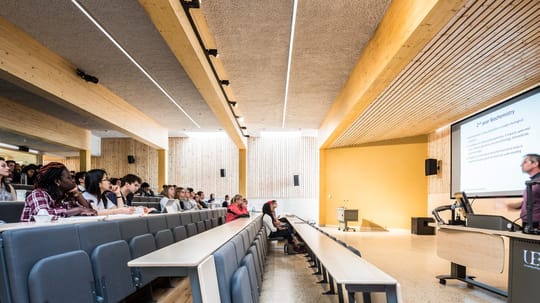
NEWS ARTICLE |
Lighting for Cognitive Load in Education
In educational settings, students’ attention can shift rapidly between screens, presentations, discussions and independent work. In these environments, the physical setting plays an important role in either supporting learning or subtly making it harder. Well-designed learning environments should reduce unnecessary mental effort, allowing students to focus on learning rather than coping with distractions or discomfort. In educational psychology, this is often described as reducing extraneous cognitive load. Lighting plays an important role in this. Thoughtfully designed lighting can help reduce strain, support focus and create learning environments that work with students rather than against them. What is Cognitive Load? Cognitive load refers to the amount of mental effort required to process information. In a learning environment, students are constantly absorbing new concepts, solving problems and switching between tasks. Educational psychology typically identifies three types of cognitive load: Intrinsic load - the complexity of the material itself. Germane load - the effort used to understand and build knowledge. Extraneous load - the unnecessary effort caused by poor instructional or environmental design. The goal of well-designed learning spaces is to minimise extraneous cognitive load, allowing students to dedicate their mental energy to learning rather than coping with distractions or discomfort. While this is often discussed in relation to teaching methods, the physical environment also plays an important role. Glare, insufficient light levels (lux), uneven light distribution and repeated visual adaptation between bright and dim areas can subtly increase cognitive strain. Over time, these environmental inefficiencies require the brain to expend more energy simply to navigate the space. Why Lighting Matters Education spaces are complex environments. Whether it is a library, classroom or lecture hall, the tasks carried out can vary significantly, and attention may need to shift constantly. In the classroom, for example, students often shift from the teacher to a whiteboard or projector, then back to their screens or notebooks. Each transition requires visual adjustment. If lighting levels are inconsistent or poorly balanced, the brain must continually compensate. Thoughtful lighting design reduces this effort. By supporting visual clarity and comfort, lighting can help minimise fatigue, maintain concentration, and create conditions better suited to learning. Effective lighting design carefully considers light distribution and brightness to support visual comfort and performance, and can also consider timing, to help optimise biological functions such as alertness, mood and overall wellbeing. The Role of Light Levels in Learning Environments One of the most fundamental considerations in educational lighting design is light level, measured in lux. Lux measures the amount of light illuminating a specific area, making it an essential unit for understanding lighting conditions in a space. Appropriate light levels help ensure that students can comfortably read, write, view screens and engage with teaching materials without unnecessary visual strain. If light levels are too low, students may experience eye fatigue and reduced alertness. If they are too high or poorly distributed, glare and discomfort can occur. General lighting recommendations apply to all educational spaces. Industry guidance suggests that reading and writing areas maintain around 500 lux to support effective visual tasks and ensure students can clearly see learning materials. Effective lighting design, therefore, balances horizontal illumination on desks and work surfaces with vertical illumination on walls, boards and faces. This helps maintain visual clarity while reducing the need for constant visual adaptation when students shift their attention between different tasks. However, light levels alone do not tell the whole story. Understanding Melanopic Lux Traditional lighting standards primarily focus on how easy or difficult things are to see. However, modern lighting research increasingly considers how light affects the body’s non-visual biological systems. This is where the concept of melanopic lux becomes important. Melanopic lux refers to the effectiveness of light in stimulating specialised photoreceptors in the eye that influence the body’s circadian rhythm – the internal system that regulates sleep, alertness and hormonal cycles. These receptors respond particularly strongly to short-wavelength, blue-rich light, similar to spectrum often found in natural daylight. For education environments, this biological response is highly relevant. Students spend long periods indoors, often under artificial lighting. If lighting does not provide sufficient melanopic stimulation, it may fail to support the natural signals that help maintain alertness and cognitive performance. Lighting designed with appropriate melanopic lux levels can help mimic aspects of daylight, encouraging wakefulness during the day and supporting healthy circadian rhythms. Supporting Alertness Through Light Appropriate light levels and melanopic stimulation work together to support alertness in learning environments. Sufficient lux levels are needed for clear visual tasks, while appropriate melanopic stimulus helps reinforce the biological signals associated with daytime focus and energy. In classroom settings, this can help students maintain concentration and reduce mental fatigue during long periods of study. At the same time, lighting must remain visually comfortable. Excessive brightness or poorly controlled glare can counteract these benefits by increasing visual stress and cognitive load. Thoughtfully designed education lighting, therefore, aims to balance three key elements: adequate lux levels for visibility, appropriate melanopic stimulus to support biological alertness, and uniform light distribution to reduce visual strain. By aligning lighting design with both visual and biological needs, education environments can better support sustained attention, comfort and cognitive performance throughout the day.
NEWS ARTICLE |
Henrik Clausen: A Life Filled With Light
The Fagerhult Lighting Academy Director, Henrik Clausen, on four decades spent understanding how light shapes the way we live. Where did your interest in light first begin, and what made you want to build a career around it? My relationship with light developed gradually. I began working as an engineer in illuminating design at Louis Poulsen in 1987, supporting both product development and lighting planning. At first, light was something technical – something that could be calculated, measured and controlled. Over time, I began to understand and appreciate what lighting can do for people. It shapes how we perceive a space, how comfortable we feel and, ultimately, how we experience everyday life. That understanding grew into a genuine passion. I sometimes say that I simply happened to live a life filled with light – but once I recognised its human value, I knew it was something I wanted to devote my career to. What were some of your earliest roles in the industry, and how did they shape the way you think about light today? In my first role as an illuminating design engineer at Louis Poulsen, I assisted research and development with optical design and supported the sales organisation with computer-based lighting planning. I later worked with quality management, international approvals, testing and technical documentation before becoming Head of Operations and Service. I came to understand that good lighting is not created by one discipline alone. It requires design, engineering, research, manufacturing, quality and a thorough understanding of the people who will ultimately use the space. My technical background taught me the importance of evidence and measurement. My later leadership and educational roles taught me something equally important: knowledge only becomes valuable when it can be understood, shared and applied. What does your role at Fagerhult involve, and what are your main areas of focus? I am Director of Fagerhult Lighting Academy and Head of Research at Fagerhult. I established the Academy to gather, refine and communicate knowledge about lighting to colleagues, customers, universities and the wider lighting community. My research work focuses particularly on the relationship between lighting, people and health. I help connect scientific knowledge with product development and practical lighting solutions. Education is also a central part of my role. I lecture internationally and teach lighting design at Aalborg University, which creates a valuable bridge between academia, industry and professional practice. Across all these activities, my purpose is the same: to use knowledge about light to add value to people’s lives. How has our understanding of the relationship between light, people and wellbeing changed over the course of your career? When I began my career, the industry’s attention was largely directed towards visual performance: whether there was enough light to perform a task, whether glare was controlled and whether the installation met the relevant standards. Those things remain essential, but we now understand that light affects much more than vision. It influences our biological rhythms, alertness, comfort, mood and general sense of wellbeing. We have moved from thinking mainly about lighting spaces to thinking about lighting for people. This has broadened the designer’s responsibility. A lighting solution should not merely satisfy a table of numerical requirements. It should respond to the activity, the architecture, the time of day and, most importantly, the needs of the people occupying the space. Have any findings during your career fundamentally changed your own understanding of how light affects people? The growing evidence for light's non-visual effects, which I touched on earlier, was a big turning point for me. Realising that the light entering the eye contributes not only to sight but also to the regulation of our internal body clock fundamentally changed how I thought about lighting. It demonstrated that illuminance on a horizontal working plane tells us only part of the story. We must also consider the light that reaches the eye, its spectrum, its timing and its duration – as well as the darkness people need at other times. The measurements matter, but they must always be interpreted in relation to human beings and their daily lives. How do you translate scientific findings into guidance that designers, architects and specifiers can apply to real projects? I believe everyone should share knowledge about lighting. To achieve that, those of us involved in research must be willing to step down from the pedestal and replace scientific language with plain, accessible language – without losing the integrity of the science. I try to begin with the human question: What are people doing in this space, when are they doing it, and what do they need from the light? From there, research can be translated into practical principles, design choices and questions that project teams can use. I don’t simply want to tell designers which number to achieve. I want to give them enough understanding to make informed decisions and to evaluate whether a lighting solution genuinely works for the people using it. Is there a particular research project, lighting concept or piece of work that you are especially proud of? I am especially proud of establishing and developing the Fagerhult Lighting Academy, which has created a platform for sharing research, practical experience, and knowledge globally. The Academy has allowed me to work with an exceptionally broad community – lighting designers, architects, engineers, students, researchers and end users from many different cultures. That exchange is important because knowledge should not remain isolated within a laboratory or a company. Its true value emerges when it helps people ask better questions and create better environments. I was deeply honoured to receive the Society of Light and Lighting’s President’s Medal in 2020 for a lifetime contribution to lighting. For me, its significance lay not only in personal recognition, but also in its recognition of education and knowledge-sharing as important contributions to our industry. What do you believe we still do not fully understand about light? We have learnt a great deal, but there is still much to understand about how different people respond to light over time. Human beings are not identical instruments. Age, health, individual sensitivity, previous exposure, behaviour and culture can all influence our needs and responses. We also need to understand more about the combined effects of light’s intensity, spectrum, direction, timing and duration in real environments. Laboratory findings are essential, but everyday life is complex. People move between daylight and electric light, indoors and outdoors, activity and rest. The challenge is therefore not simply to discover individual effects. It is to understand how we can apply that knowledge responsibly while still creating spaces that are comfortable, beautiful, sustainable and adaptable. Has working so closely with light changed the way you experience everyday environments? What do you personally notice when you enter a well-lit or poorly lit space? Yes, absolutely. I notice where the light comes from, where it falls and how it shapes faces, objects and surfaces. I notice contrast, glare, shadows and whether the lighting works with the architecture or competes with it. I also notice whether a space feels welcoming and intuitive, even before I begin to analyse why. In a well-lit environment, the lighting often appears effortless. It supports what people are doing, helps them understand the space and makes them feel comfortable without demanding attention for itself. Poor lighting is often immediately apparent. You may struggle to see someone’s face, feel exposed by excessive brightness or become tired because the environment is flat, glaring or disconnected from the time of day. Once you have spent a lifetime studying light, it is difficult to enter a space without observing it – but I still enjoy being surprised by an excellent solution. When you look back over your career so far, what has kept you curious and enthusiastic about light? Light is never only one thing. It is science, engineering, architecture, design, biology, psychology and emotion. The more we discover, the more questions emerge. What has sustained my enthusiasm is the opportunity to work with innovative and creative people from many professions and cultures. Students are particularly valuable in this respect because their questions challenge established assumptions and force us to explain what we think we know. Above all, I remain motivated by the belief that lighting can add tremendous value to our lives. There will always be more to learn, and more knowledge to share.
Return to top